OUR PRESIDENT OFFICIALLY INAUGURATED THE SELIMIYE MOSQUE
6/15/2026
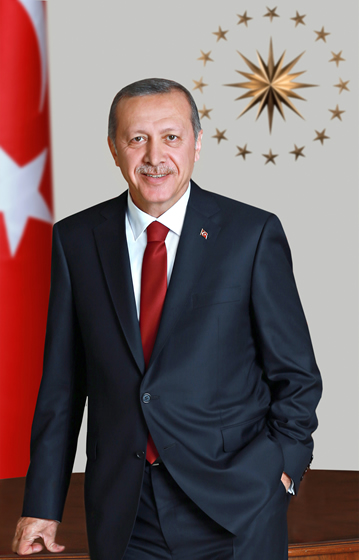
The restoration works carried out by our Directorate General over the past four years at the Selimiye Mosque, one of the most precious legacies of our waqf civilization, have been completed. The official inauguration of this unparalleled masterpiece, inscribed in stone by Mimar Sinan, took place following the Friday prayer attended by our President, Mr. Recep Tayyip Erdoğan.
“PRESERVING THE AUTHENTICITY OF THE MONUMENT WAS THE GUIDING PRINCIPLE AT EVERY STAGE”
Following the prayer, President Erdoğan delivered remarks at the Reopening Ceremony of the Selimiye Mosque for Worship Following Restoration, the Mass Opening Ceremony of Newly Completed Facilities and Projects, and the Key Handover Ceremony. Emphasizing that the Selimiye Mosque is not only one of the finest examples of Turkish-Islamic architecture but also one of the most aesthetically significant monuments in world architecture, he stated:
“By restoring the Selimiye Mosque in accordance with its original character, we are grateful to have reopened it for worship today. Our four-year restoration process has become the most comprehensive conservation effort in the mosque’s 450-year history. The restoration was carried out by our Directorate General of Foundations under the guidance of our Scientific Committee, composed of distinguished experts. From decorative painted ornamentation to the stone fabric, from interior arrangements to the revitalization of the surrounding environment, preserving the authenticity of the monument was the guiding principle at every stage.”
THE MOST COMPREHENSIVE RESTORATION IN ITS HISTORY
As part of the most extensive restoration campaign in the history of the Selimiye Mosque, meticulous investigative scraping works were conducted on the main dome. Restoration works were subsequently initiated in accordance with the prepared survey, restitution, and restoration projects for the decorative painted ornamentation of the main and semi-domes.
Comprehensive stone documentation studies were carried out, damage assessment drawings were prepared, and restoration methods were determined through on-site evaluations. The lead coverings of the upper sections of the structure were removed, and the mosque’s structural condition was thoroughly reviewed. Necessary structural strengthening measures were implemented.
The mosque’s tiles were cleaned, and missing tiles were carefully completed. Repair and reinforcement works were carried out on the minarets. Conservation of the müezzin’s platform (müezzin mahfili) and the mihrab tiles was completed. Cleaning, conservation, and restoration works were also undertaken on the kündekâri entrance doors and window shutters, which constitute some of the mosque’s most significant architectural elements.
New carpets were produced using motifs and color schemes derived from historical carpet samples preserved at the Museum of Turkish and Islamic Arts in Istanbul. In addition, the mosque’s lighting and sound systems were comprehensively renewed.